

What is a workforce intelligence platform?
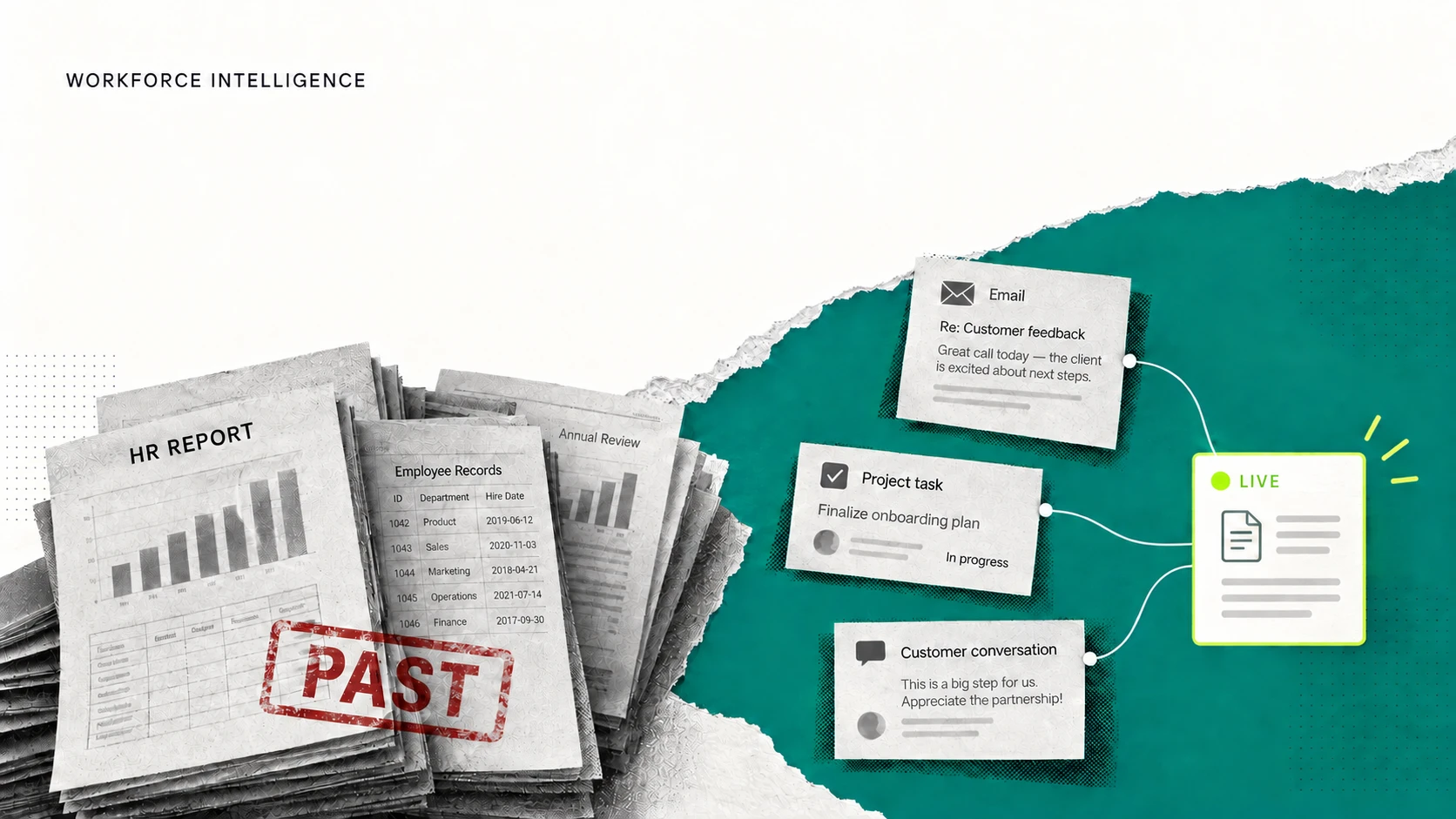
A workforce intelligence platform is a system of intelligence for work. Every other HR tool you own is a system of records.
That distinction sounds abstract until you see it in practice. An HRIS tells you someone's title and level. An LMS tells you they finished a course. The review tool tells you a score from six months ago. None of that tells you what is happening right now.
A workforce intelligence platform reads the work itself, continuously, and keeps a live, explainable model of it. Built from the evidence, not a form someone filled in.
Why your HR stack is missing something?
Every organisation is sitting on an enormous amount of signal about how its people work. Whether a sales rep is spending more time on low-value accounts than high-potential ones. Whether a new manager is actually having the one on ones they committed to or just marking them done. Whether the team that just went through a leadership change is drifting or holding steady.
None of that was being read.
Tools were capturing isolated data points and stopping there. Course Completions, Review Scores, Survey Responses, and OKR updates. Each one accurate within its own boundary, meaningless without the others. The people making decisions about talent were working with fragments:
- A completion rate that said the sales team finished the new product training but said nothing about whether they could actually pitch it.
- A review score that said someone was performing well but could not explain why their team's output had quietly declined over the same period.
- A survey result that flagged low engagement in a department three months after the manager who caused it had already left.
Each data point arrived too late and told too little. This is the problem workforce intelligence was built to solve.
How does a workforce intelligence platform work?
A workforce intelligence platform connects to the tools your teams are already using, from communication and email to CRM and project management. It does not ask anyone to fill in a new form or log into a new system.
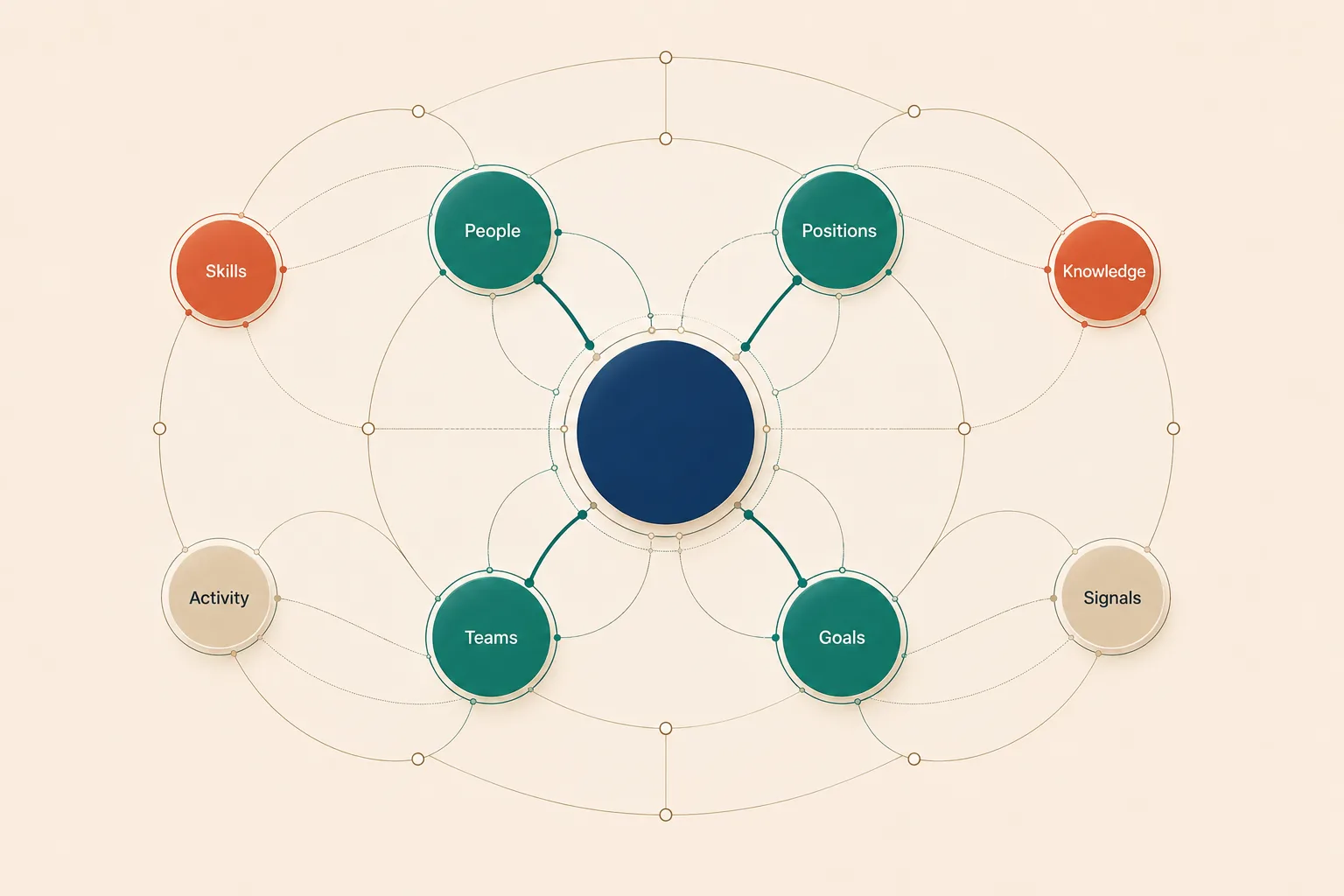
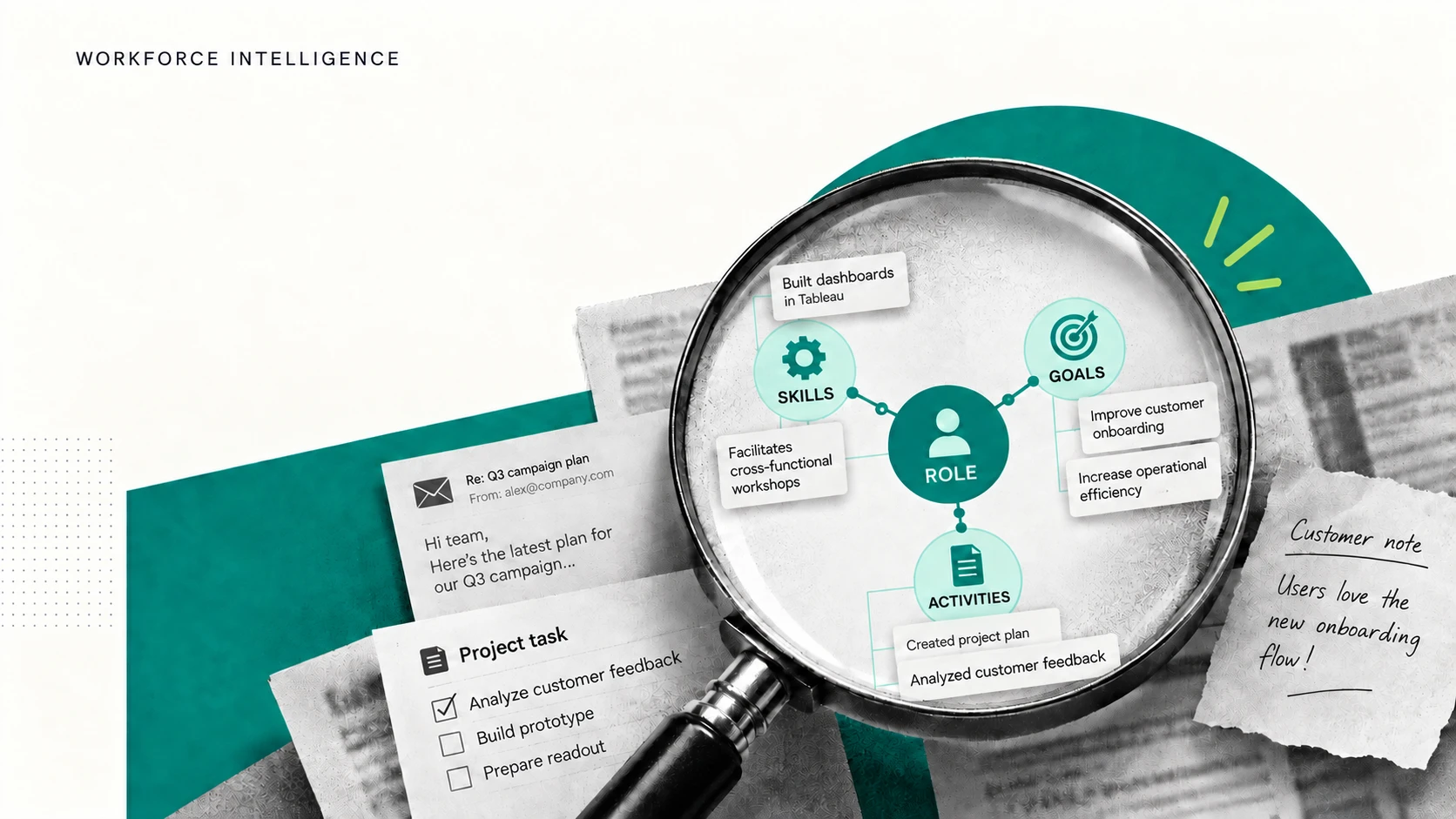
At its core is one connected model of the organisation: people, positions, teams, skills, goals, and company knowledge held together as a single graph rather than scattered across separate tools.
Every signal the platform reads flows into that model and updates it continuously. From those signals, it builds a live capability profile on every person.
The feedback loop changes as a result. A sales rep who completed the new pricing training but has not changed how they structure proposals gets flagged before the next lost deal explains why. A manager whose one on one cadence has dropped to once a month gets surfaced before their team's next engagement score does. The insight arrives before the cost does.
How is a workforce intelligence platform different?
HR analytics software and workforce analytics software were built to report on specific processes, costs, and trends. A workforce intelligence platform connects those records to live work signals so leaders can see why performance is changing.
Performance does not happen within boundaries, though. It happens across all of them, continuously, in the actual work your people do every day between those moments. So what you are left with is fragments:
- A completion rate that tells you learning completion status, not whether that translated into outcome.
- A review score that tells you about a manager's performance, not how the team grows under their leadership.
- A survey result that tells you the engagement rate, not the root cause for a particular result.
Right now that gap gets filled with gut feel and visibility. Development investment goes where it is loudest, not where it is most needed.
A workforce intelligence platform connects across all of it, reads the signals your existing tools are already producing, and turns them into something a leader can act on before the problem becomes expensive.
There's a deeper difference too. Most HR tools were built for a world where measurement happened once or twice a year. A workforce intelligence platform assumes intelligence should be continuous. Learning should come from someone's actual gap, not a catalogue someone assigned them. Appraisal should not be a form filled out at year end.
Before you measure performance, define what good looks like
Most organisations start measuring before they have answered the one question that makes measurement meaningful: “What does excellence actually look like for this role?”
A specific, honest picture of what the right behaviours, skills, goals, and daily activities look like for someone genuinely performing at their best in this position, at this level of seniority, inside this organisation.
Without that definition, you are not measuring performance rather, perception.
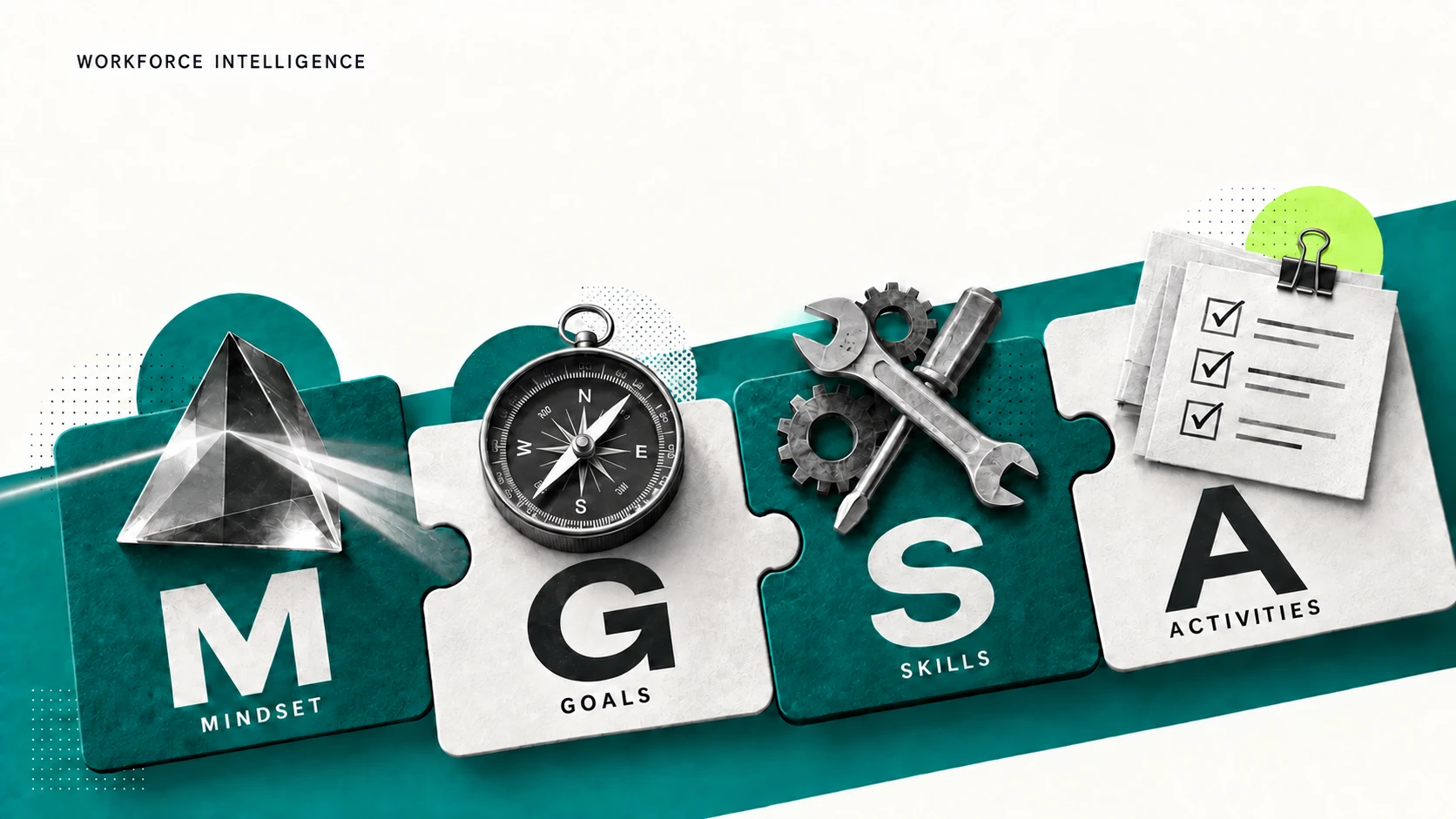
Lyearn solves this primarily. The MGSA framework builds a role-level blueprint of excellence, specific to the position and seniority level, before reading any signals. Every measurement that follows is read against that blueprint, a defined standard of what good actually looks like for that role. That is what separates meaningful performance intelligence from another layer of subjective HR data.
Why a workforce intelligence platform is not optional anymore
An Enterprise sales team misses Q3.
- The VP says it is a pipeline problem.
- The L&D head says the team needs better discovery skills.
- The sales enablement team says reps are still selling with the old pitch six weeks after the product update.
Three diagnoses, no way to verify any of them, so you fund all three and hope.
This is how most organisations respond to performance problems, because they have no other option.
Workforce intelligence reads what is happening at the role level continuously, from the work already being done. A team's activities diverging from their goals shows up before the number does. A skill gap widening despite training investment surfaces before the next review cycle confirms it.
The difference between seeing it early and finding out late is the difference between a course correction and a crisis.
What changes when you actually have this visibility?
- A sales manager sees whether reps are actually asking the right questions on discovery calls, not just whether the pipeline looks healthy.
- An L&D leader sees whether negotiation skills changed on the job after the training, not just whether people completed it.
- A CHRO sees which teams have the capability to execute the next growth phase and which ones have a gap that will slow it down.
The decisions get better because they are based on what is actually happening, not on what a review cycle captured or what a manager noticed.
When measurement is continuous, connected to real work, and always explainable back to evidence, it stops being a verdict and starts being a development plan.
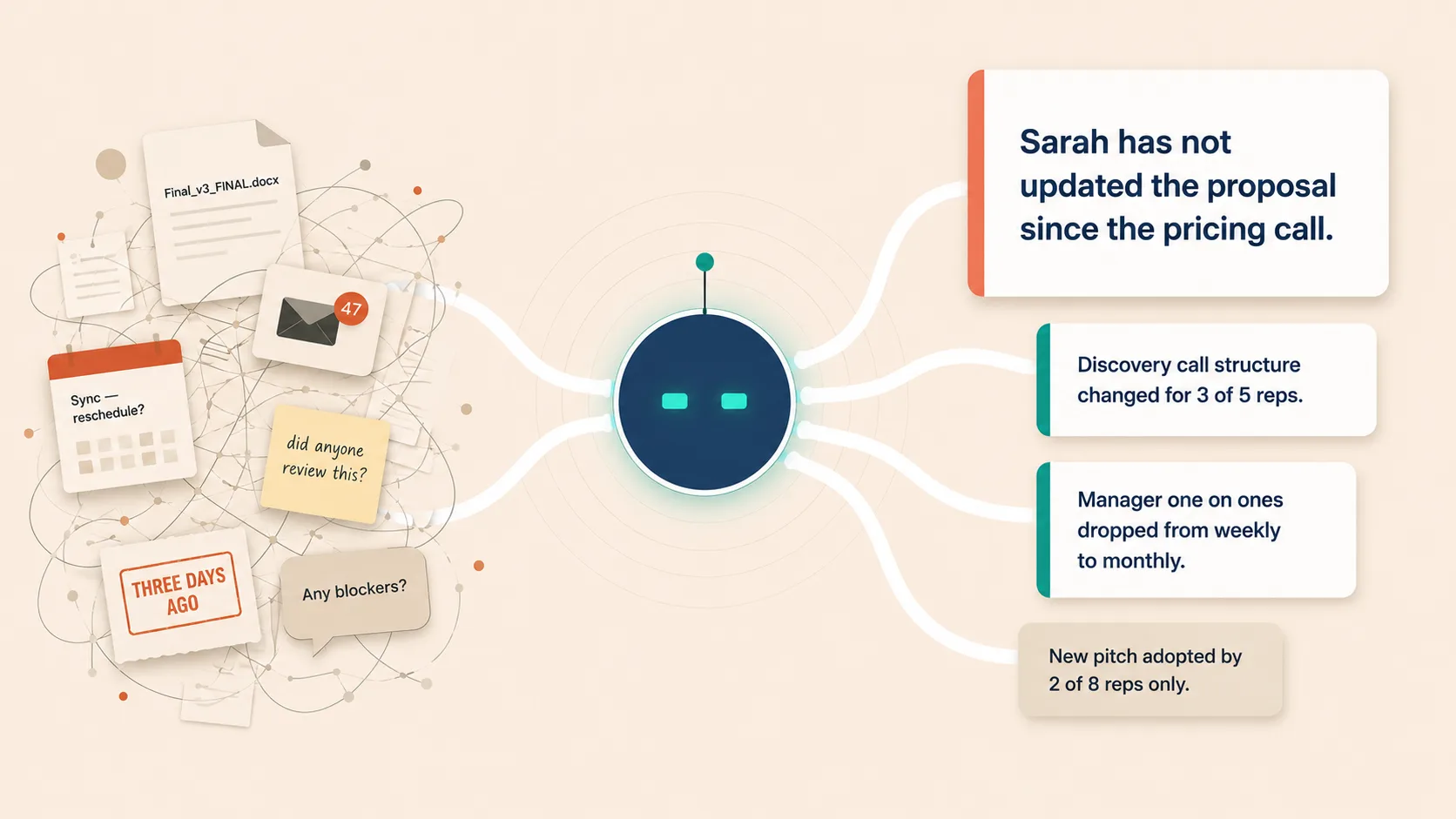
That is the shift a workforce intelligence platform makes possible. It is the shift Lyearn was built to deliver.
Frequently asked questions

People analytics looks at historical data after the fact. Workforce intelligence reads live signals continuously, at the role level. One tells you what happened. The other tells you what is happening now.
CHROs, COOs, CFOs, and heads of workforce management. Leaders who need to know whether the business has the capability to execute, not just whether HR processes are running.
No. It connects across them and surfaces what none of them could show individually.
Most tools see one fragment of how your people work. The HRIS has records. Slack and email have activity. The LMS has learning history. None of it connects.
Lyearn pulls signals from all three, runs them through the MGSA framework, and produces one deterministic, auditable score per person, per role, against a pre-researched definition of what excellent looks like for that role. Not a manager's opinion. Not a self-assessment. What the work itself shows.