



When "Working Hard" Isn't Enough
Picture this: It's Monday morning. Your team gathers for the weekly standup. Everyone shares updates. Projects are moving. People are busy.
But here's the uncomfortable question: Are you moving towards something meaningful, or just... moving?
This challenge haunted Andy Grove, former CEO at Intel in the 1970s. The company was growing fast, but teams worked incredibly hard while pulling in different directions. Sales pushed one priority, engineering chased another and marketing had its own agenda.
Grove needed a practical goal-setting framework that could connect what people did every day to what the company was trying to achieve. He created the OKR framework: Objectives and Key Results.
What Makes the OKR Framework Different
The OKR meaning is simple: Objectives and Key Results turn unclear goals into measurable results that drive business success.
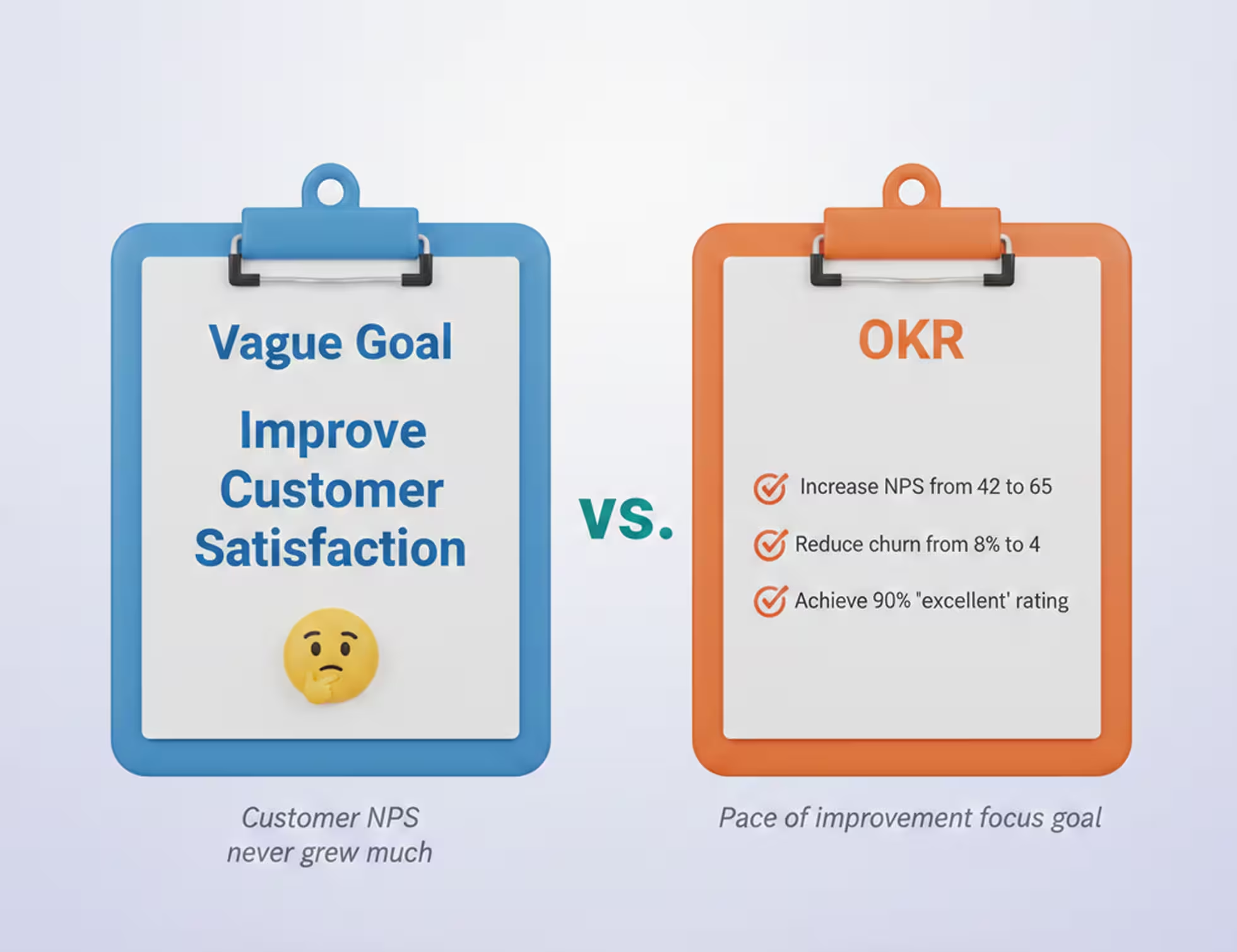
Instead of saying: "We want to improve customer satisfaction", OKRs force you to say: "Increase Net Promoter Score from 42 to 65, reduce churn from 8% to 4%, and achieve 90% 'excellent' support ratings all by the end of Q3."
The difference you ask? One feels good in a meeting while the other gives you measurable goals with clear targets.
The Google Connection
In 1999, an American venture capitalist John Doerr introduced the OKR framework to a small search engine with about 40 employees. That company was Google.
Google used Objectives and Key Results to scale from 40 to 60,000 employees while maintaining startup-like clarity. Today, they credit OKRs as a key factor in their ability to scale innovation. The secret? This goal-setting framework gave them a common language for ambition.
Breaking It Down: Objectives and Key Results
Objectives are qualitative statements that define where you want to go. They're memorable, ambitious, and clear.
Examples:
- "Become the go-to resource for HR professionals"
- "Transform how our sales team engages enterprise clients"
Key Results are specific, time-bound metrics proving you're making progress. Together, Objectives and Key Results create a complete system for strategic alignment.
For example:
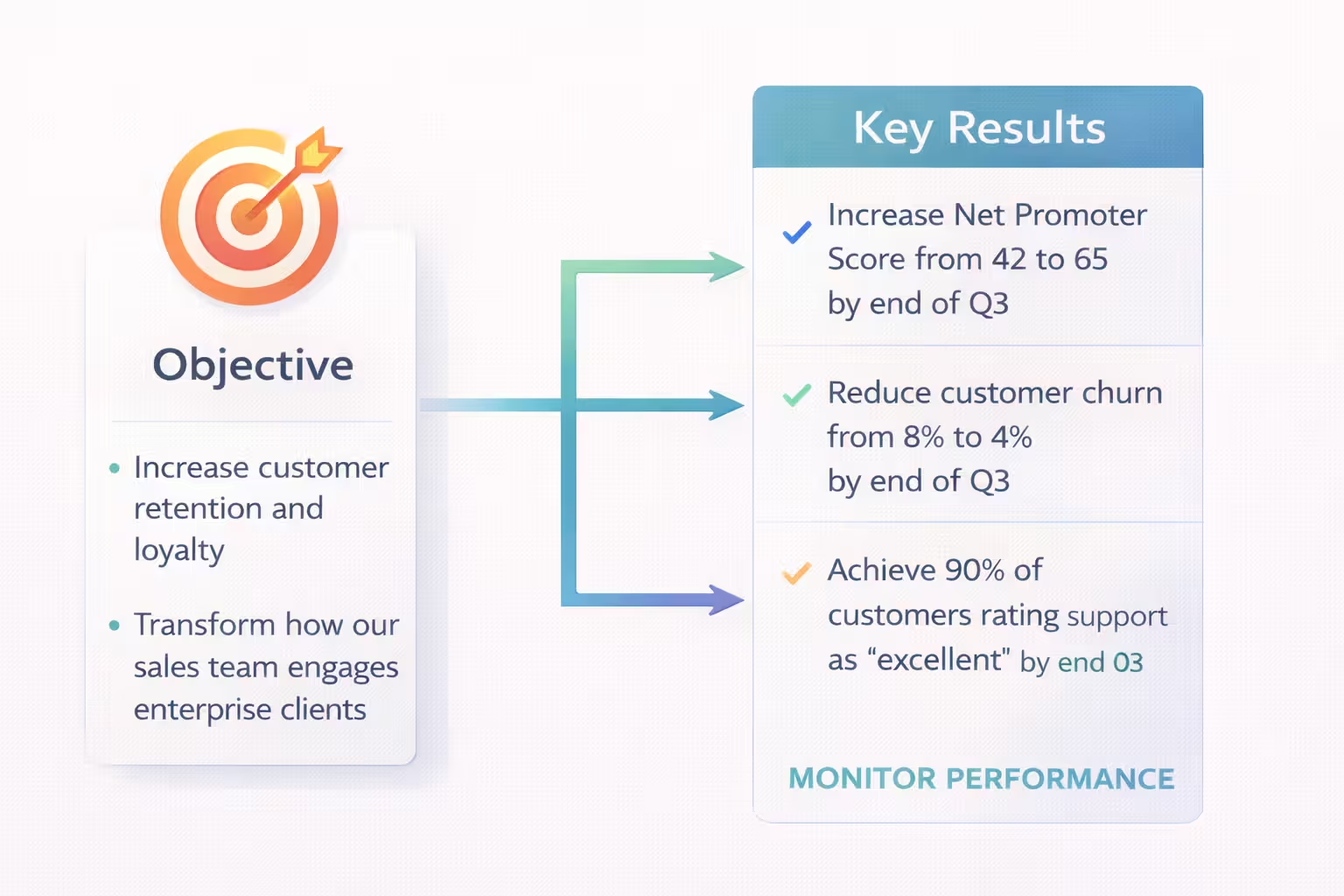
Objective: Increase customer retention and loyalty
Key Results:
- Increase Net Promoter Score from 42 to 65 by end of Q3
- Reduce customer churn from 8% to 4% by end of Q3
- Achieve 90% of customers rating support as 'excellent' by end of Q3
Now everyone knows exactly what success looks like. No debates. The numbers tell the story. This is how the OKR framework transforms vague aspirations into measurable goals.
The 60-70% Rule: Why Failure Is Built In
Here's what surprises most people about OKRs: Organizations achieving 60-70% of their Key Results are using the framework effectively. If you're consistently hitting 100%, your goals are too conservative.
This is intentional. The OKR framework pushes you towards ambitious, measurable goals that drive meaningful progress, not safe targets that keep you comfortable. Teams that achieve 70% of ambitious Objectives and Key Results often accomplish more than teams hitting 100% of safe targets.
OKRs vs KPIs: Know the Difference
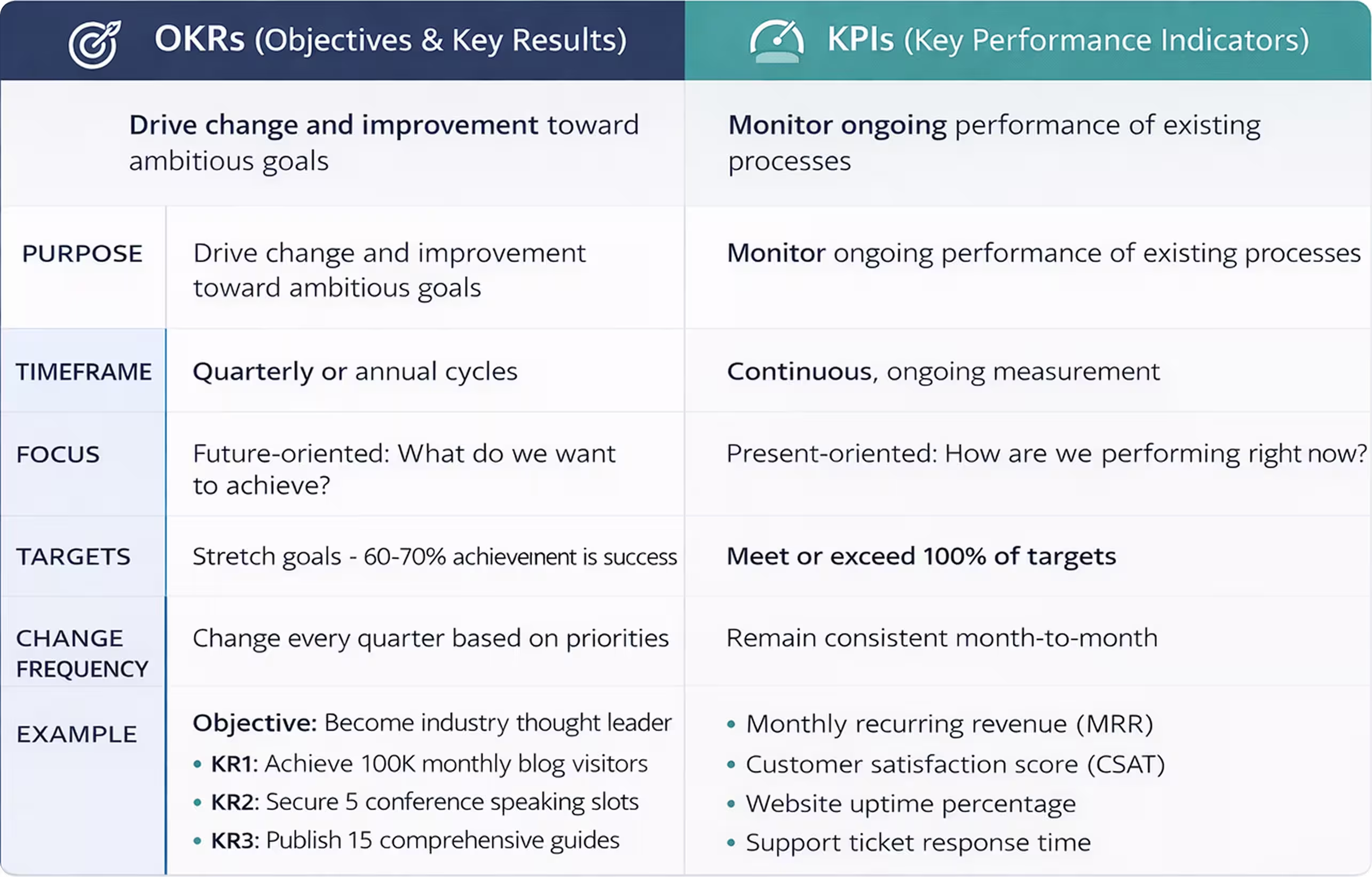
Understanding OKRs vs KPIs is crucial for effective goal-setting.
KPIs track current performance: "How are we doing right now?"
- Monthly recurring revenue
- Customer satisfaction scores
- Website uptime
OKRs drive change toward ambitious goals: "What do we want to achieve?"
- Expand into three new markets
- Launch mobile app with 100K downloads
- Reduce onboarding time by 50%
The key difference in OKR vs KPI: KPIs monitor operational health through progress tracking. OKRs create strategic growth through measurable goals aligned with your vision.
Real-World Examples of Objectives and Key Results (OKRs)
Sales Team: Build scalable sales engine
- Key Results: $5M pipeline value, 25% conversion rate, 60-day sales cycle
Product Team: Deliver exceptional onboarding
- Key Results: 85% activation rate, 28% trial conversion, 24-hour time-to-value
Marketing Team: Establish thought leadership
- Key Results: 100K monthly visitors, 15K subscribers, 5 conference speaking slots
Notice how each OKR transforms vague aspirations into concrete, measurable goals with clear progress tracking.
Four Principles That Make the OKR Framework Work
1. Focus Over Volume
Limit to 3-5 Objectives per team with 2-4 Key Results each. This constraint forces strategic alignment and if everything is a priority, nothing is.
2. Measurement Over Guesswork
Every Key Result must deliver measurable goals. Avoid vague language like "improve" or "enhance." Instead use specific metrics: "Increase from X to Y." This is the core OKR meaning, that is, clarity through measurement.
3. Regular Progress Tracking Over Set-and-Forget
Review OKRs bi-weekly for effective progress tracking. Ask: Are we on track? What's blocking us? Should we adjust? This regular rhythm keeps Objectives and Key Results alive.
4. Transparency Over Privacy
Make all OKRs visible company-wide for better strategic alignment. Public goals drive accountability and coordination across teams.
The Integration Challenge
Here's what most people won't tell you about implementing this goal-setting framework: The OKR framework itself isn't the hard part. Connecting strategic goals to daily work is.
Most organizations face this disconnect:
- In planning tools: Beautiful Objectives and Key Results
- In project tools: Tasks and deadlines
- The problem: No visible thread connecting daily activities to measurable goals
Team members complete tasks without understanding how they contribute to Key Results. Managers keep updating OKR progress tracking manually from multiple systems. This friction kills adoption of even the best goal-setting framework.
Where Most OKR Tools Break Down
Here's what typically happens. Leadership sets a Key Result: "Increase sales conversion from 15% to 25%" The team opens their OKR platform for the weekly check-in ritual, updates progress manually, discusses blockers in yet another meeting. The ceremony continues but conversion stays stuck at 16%.
Traditional OKR platforms were built by methodology consultants obsessed with "doing OKRs right".
Weekdone enforces weekly check-ins. Perdoo demands strict quarterly cycles. Quantive requires complex alignment hierarchies.
But most teams don't. Some quarters move fast, others need flexibility. Some teams thrive on check-ins, others find them disruptive. Some goals need daily tracking, others monthly reviews.
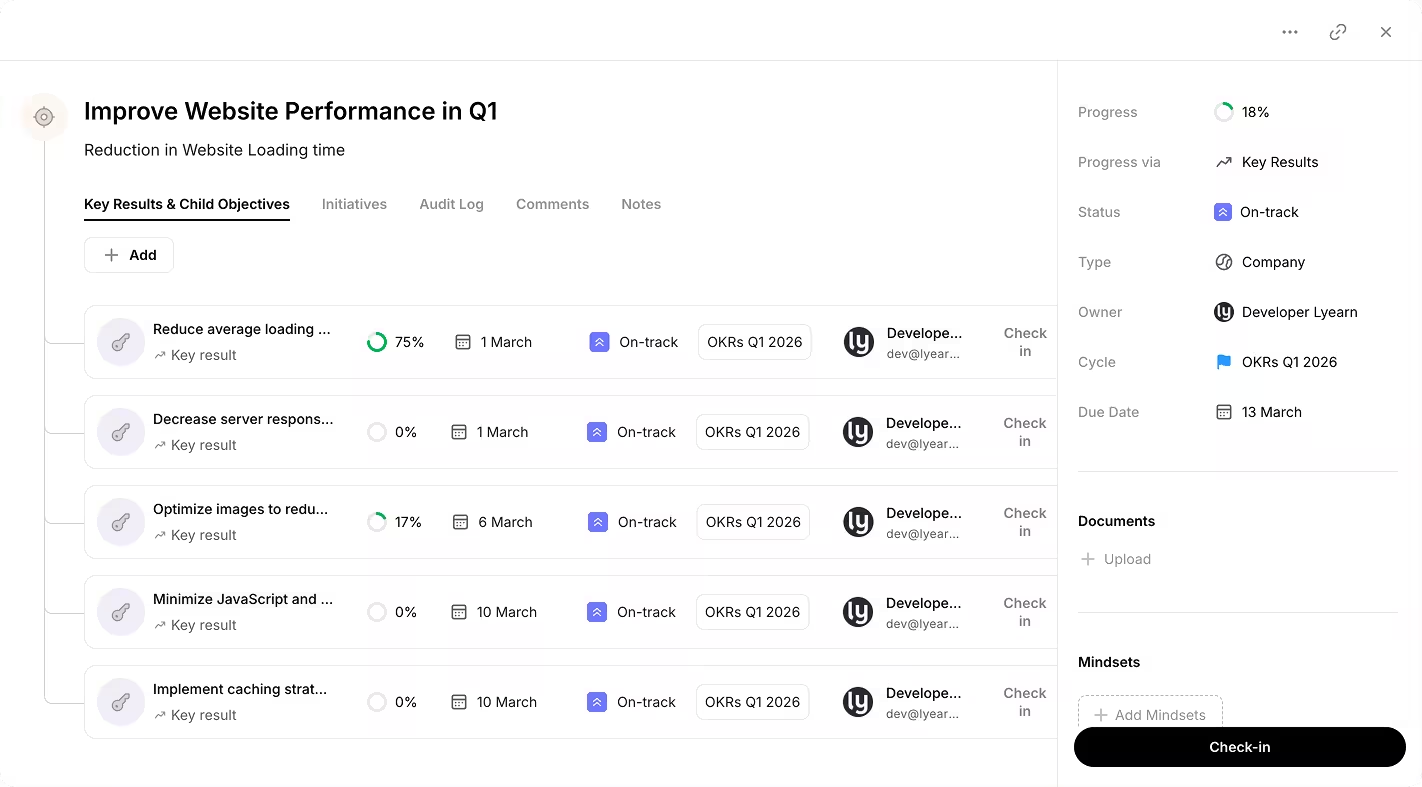
This is where Lyearn takes a different approach. Instead of forcing teams into rigid OKR orthodoxy, it adapts to how work actually happens. Need quarterly cycles? They're there. Prefer continuous goal-setting? That’s there too. Want manual check-ins for strategic goals but automatic task-based tracking for execution-heavy objectives? You can do both.
The platform offers AI-assisted goal creation for teams just starting with OKRs, while giving experienced practitioners full manual control. Integrate your existing or new tasks/projects as and when developments happen. Advanced analytics provide visibility without requiring everyone to become OKR experts.
The Real Power: Strategic Alignment at Scale
After a few quarters with the OKR framework, there’s a visible shift.
Meetings become focused around measurable goals and progress tracking. Resource allocation becomes clear based on Key Results that matter most. New hires understand priorities immediately by reading team Objectives and Key Results. Cross-functional collaboration improves naturally through strategic alignment.
This is what Grove discovered at Intel and what Google scaled to 60,000 employees: The OKR framework creates a shared language for ambition and transparent progress tracking of what matters most.
Your Next Step with OKRs
- Start simple with this goal-setting framework.
- Choose 3-5 Objectives for your next quarter.
- Define clear, measurable Key Results.
- Review progress every two weeks.
- Celebrate wins and learn from failures.
Remember: The goal isn't perfect Objectives and Key Results. The goal is better strategic alignment, sharper focus, and measurable progress toward what truly matters.
Lyearn combines intelligent goal-setting with practical execution. Create OKR cycles at every organizational level, let AI assist with goal creation, and watch progress update automatically as your team completes tasks. Whether you prefer structured quarterly reviews or flexible continuous tracking, Lyearn adapts to how your team actually works,
See how organizations are achieving strategic alignment without the typical OKR complexity. Book a demo to explore how Lyearn can transform your goal-setting approach.
Visit: lyearn.com | Connect: LinkedIn | Explore: Case Studies | Learn: Blog